What actually happens on an eyebrow transplant day.
I do not like surprises, and neither do my patients. This page walks through the day in order: the design, the donor area, how the grafts are placed, and what the first days afterwards look like.
Before the day begins
The day of the procedure is when everything we have already discussed gets carried out. It is not when decisions get made. Once a date is fixed I send you written preparation instructions. They are standard in outline but specific to you — they change with your medical history, which is why they are not the same as a list found online.
Come in something comfortable that buttons at the front; at the end of the day you will not want to pull a t-shirt over your head. You do not have to bring anyone with you, though most people travelling from another city or country choose to.
Assessment and design
The day starts in front of a mirror, before anything is done. I draw the brow shape against your facial proportions: where the head of the brow begins, where the arch sits, where the tail should end. Then you look. If it sits too high we bring it down; if it reads too heavy we take it back.
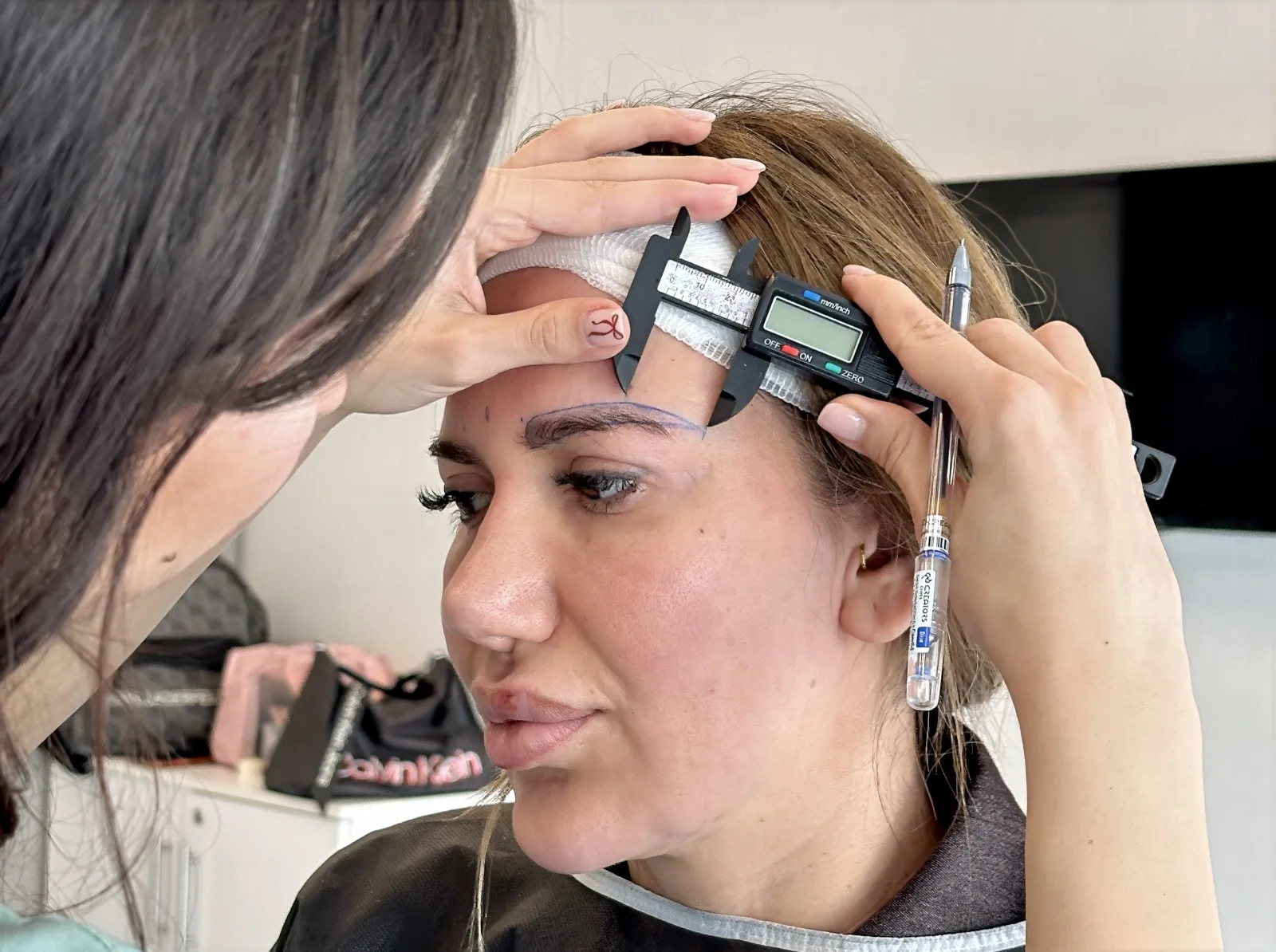
I do not rush this part. Nothing is placed until we have agreed the drawing, and the approval is yours. We sometimes revise the design several times in one morning, which is entirely normal. What I do not want to hear afterwards is that you had actually wanted it a little finer.
The drawing sets the boundaries. How the brow finally reads is decided by the angle and direction of the hairs and how they settle over time — which is why the first weeks do not look like the first year.
The donor area
The hairs placed in your brow are your own, and they usually come from the lower part of the nape. I prefer that area because the hair there is the closest match to brow hair in calibre and texture. Which area is suitable varies from person to person and is decided at assessment.
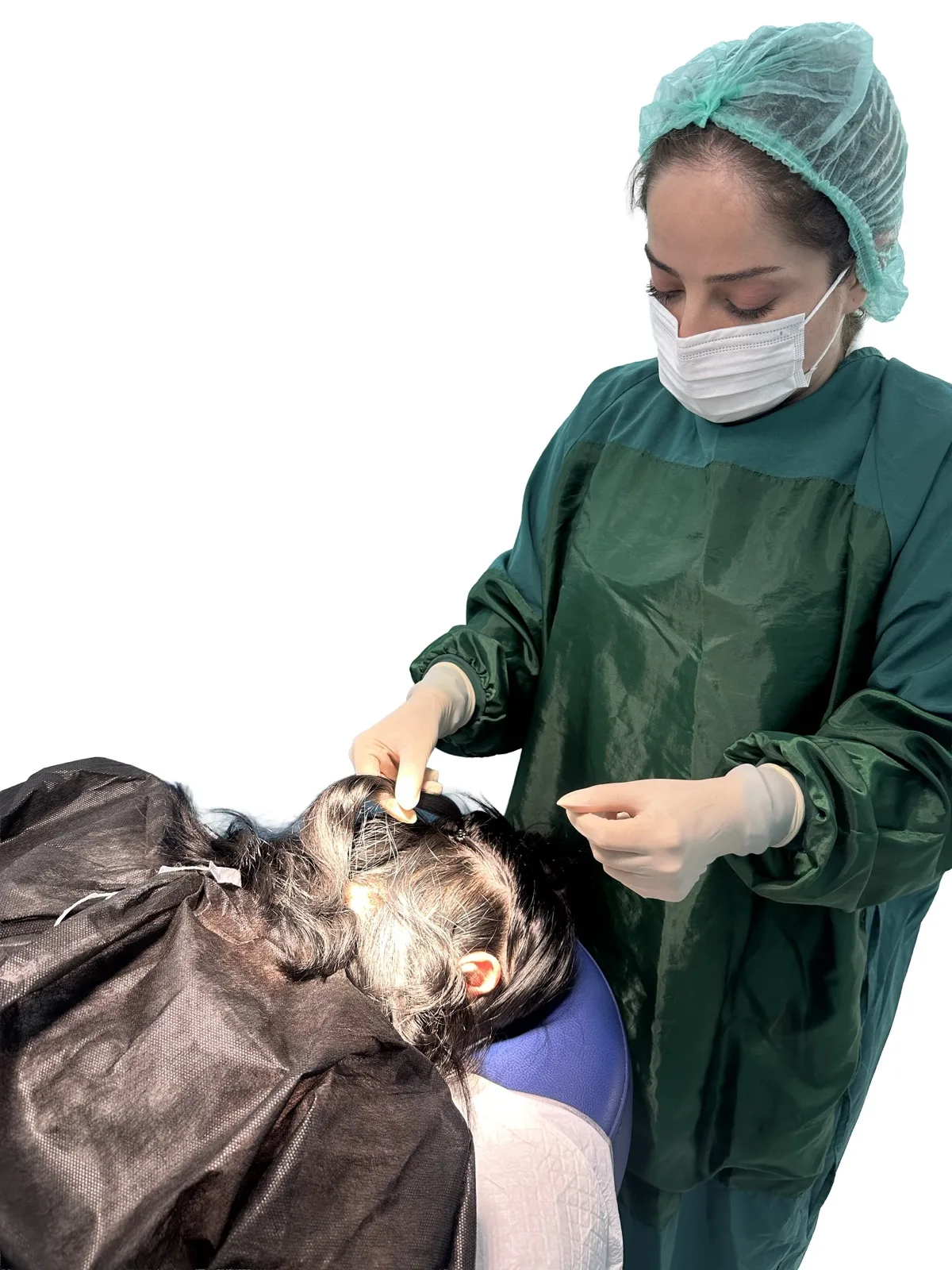
A small section is trimmed short so the hairs can be taken, and the hair above it generally covers this. Here is the part I have to be straight about: small punctate marks remain in the donor area. Once the hair grows they are usually not visible, but you should decide knowing that they exist.
The donor area is a finite resource. Every hair used today is one that cannot be used for an adjustment later. That is why I take what the design needs rather than the largest number that could be taken.
How grafts are taken and placed
The hairs are taken individually, as follicular units. Brows are mostly built from single-hair units, because brow hair grows singly rather than in clusters. The units are kept protected until they are placed.
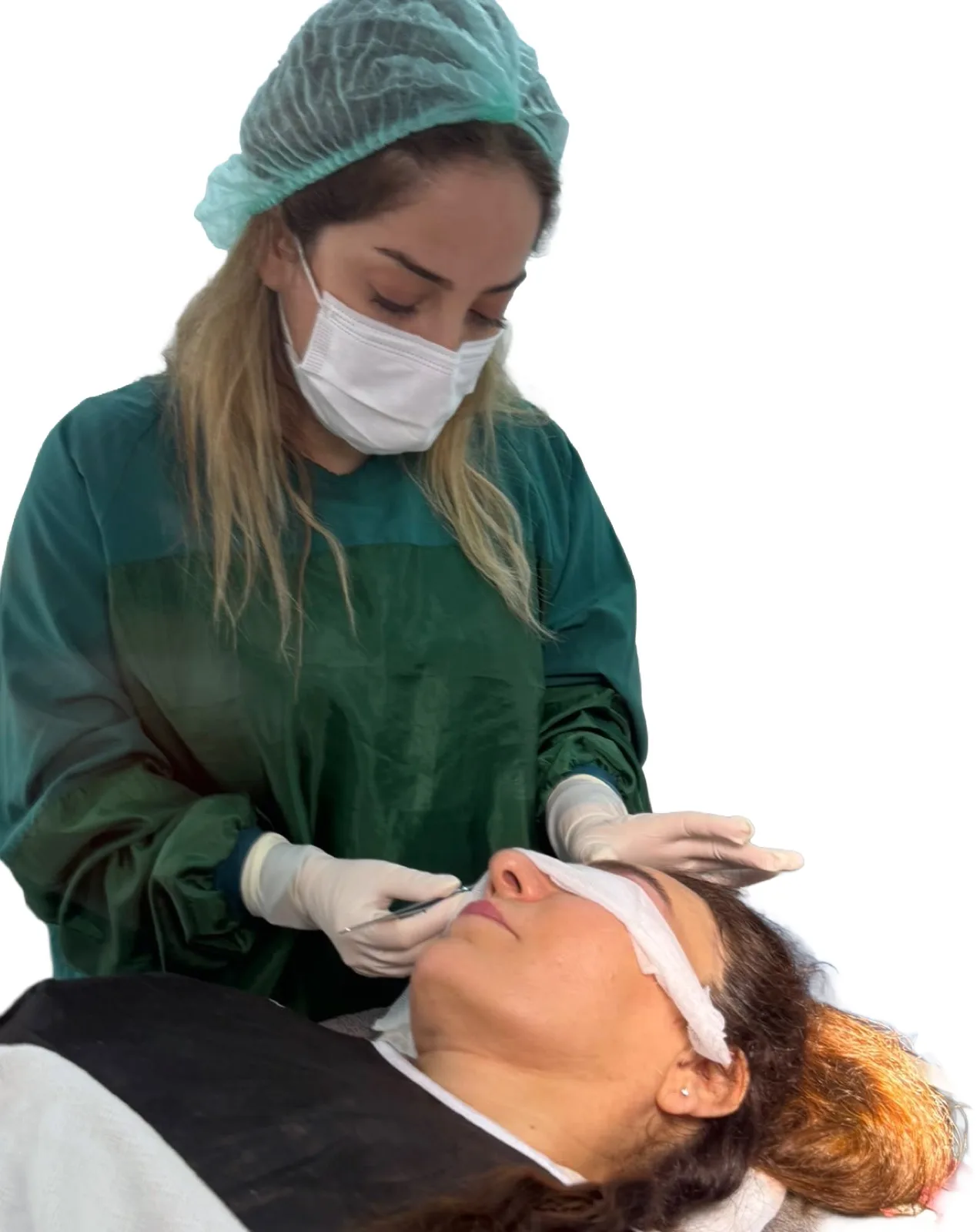
Placement is the slowest part of the day and the stage that determines the result. A very small site is prepared on the surface of the skin for each graft, and the angle and direction of that site are decided one graft at a time. At the head of the brow, hairs run almost upward; across the body, they turn outward; and at the tail, they lie down and away. A hair set at the wrong angle looks transplanted even if its length is correct.
This cannot be rushed. It is also why I take a limited number of people in a day: when attention wanes, angle is the first thing to suffer, and you are the one who notices that months later.
Anaesthesia and how long the day takes
The procedure is carried out under local anaesthetic. You are awake throughout — you can talk, ask for a pause, or have a glass of water. There is a sensation during the first minutes while the anaesthetic is given, and I tell people that in advance, because it is unpleasant when unexpected and manageable when anticipated. After that, the area is numb.
It is done in a single session, and that session usually takes up a large part of the day, with breaks. The length depends on you, the design, and how much area is being covered, so I do not quote a fixed number of hours in advance; I go through the plan for your day at consultation. You return to where you are staying the same day.
The first days afterwards
At the end of the day your brows look darker, heavier, and more defined than they are meant to. That is temporary. Small crusts around each placed hair and some redness are expected, and there may be some swelling in the first days.
The most important thing to know is this: many of the placed hairs shed during the first weeks. That is an expected stage and does not by itself mean a graft has failed. New growth comes through over the following months, and the result is judged once it has grown in rather than while it is still coming through. Patience matters here as much as technique does.
You leave with written aftercare instructions, and I follow up at set intervals once you are home. The recovery page sets out how the healing actually progresses, day by day.
Questions
- Am I awake during the procedure?
- Yes. It is done under local anaesthetic. You are awake throughout and can talk or ask for a break at any point.
- How many sessions does it take?
- One session is planned for most people. In some cases a second is discussed later to add density — that is an outcome anticipated from the start, not a failure.
- Can I fly the next day?
- Many patients travel in the days after the procedure, but we agree the timing for your case specifically. Plan the length of your stay around the first days of healing, not just your calendar.